
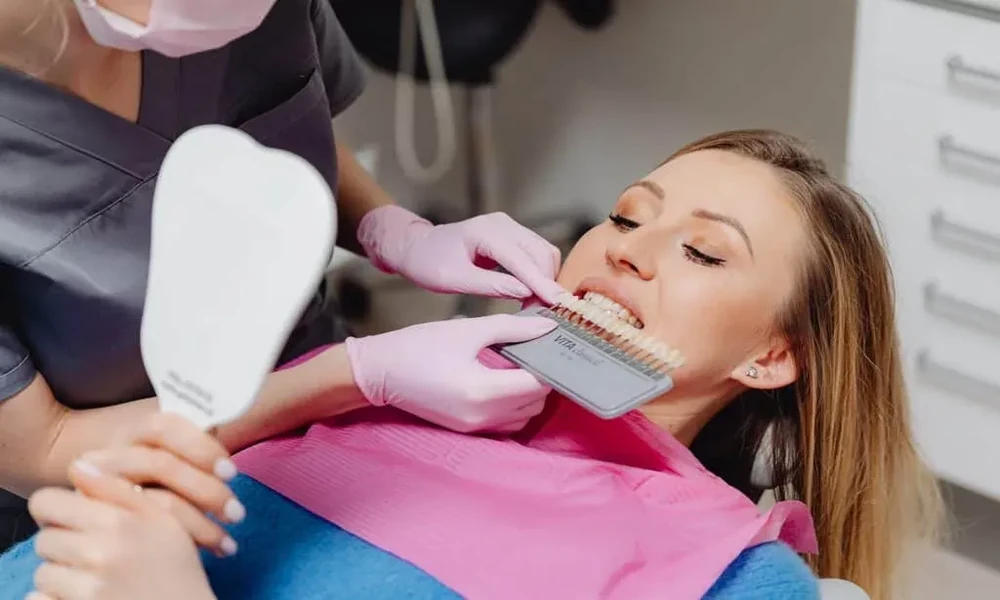
You might be feeling stuck every time you see your reflection. Maybe you cover your mouth when you laugh, avoid close-up photos, or rehearse how much you will smile before a meeting. It might not be that your teeth are terrible. It is that they do not match how you want to show up in the world, and that gap between how you feel inside and what you show outside can be exhausting. With general dentistry in Calgary, you can begin to close that gap and feel more at ease with your smile.
If that sounds familiar, you are not alone. Many people live with small chips, stains, gaps, or crooked teeth for years, telling themselves it is “not that bad,” yet still feeling a quiet sting of self-consciousness every day. The good news is that modern cosmetic dentistry options for confidence are far more gentle, flexible, and natural looking than they used to be, and you can usually start with small changes instead of a full makeover.
In simple terms, there are four common paths that can boost your everyday confidence. Whitening to brighten what you already have. Bonding to repair or reshape. Orthodontic treatment to straighten. And veneers to create a new, natural looking surface. Each one has its place, its costs, and its tradeoffs. Once you understand these, you can choose what actually fits your life instead of guessing or feeling overwhelmed by glossy before and after photos.
Why does your smile bother you more than it “should”?
Maybe it started with one offhand comment in high school about “yellow teeth.” Or you saw a photo from a wedding and thought, “Is that really my smile” You might tell yourself you are being vain, yet you still think about it before dates, interviews, or even simple conversations.
That tension is real. On one hand, you know teeth are about health and function. On the other hand, your smile is the first thing many people notice, and it shapes how you feel in social and professional situations. When you do not trust your smile, you might speak less, avoid eye contact, or skip opportunities that matter to you. Over time, that chips away at confidence in a way that has nothing to do with vanity and everything to do with how you move through your day.
So where does that leave you It often leaves you stuck between two fears. The fear of staying the same and the fear of making a costly mistake. You might worry that whitening will make your teeth sensitive, that braces will be embarrassing as an adult, or that veneers will look fake and “too Hollywood.” You might also be unsure what is medically sound versus what is just marketing.
To move out of that stuck place, it helps to look at the main cosmetic dental treatments in a grounded, side-by-side way, without pressure or hype.
What are the 4 cosmetic dentistry options that truly change everyday confidence
Think of these four paths as tools. Each one solves a different problem. Sometimes you use one. Sometimes a dentist combines two or three for the best result.
1. Professional teeth whitening for a brighter, fresher look
Staining from coffee, tea, wine, or smoking is one of the most common confidence killers. You might brush carefully and still feel that your teeth look dull or yellow in photos.
In-office whitening uses stronger, controlled whitening gels with protection for your gums. Treatments can often lighten your teeth several shades in about an hour, with take-home trays to maintain the result. Done properly, it is safe for the enamel and can make a surprising difference in how “awake” and healthy your smile looks.
Whitening is usually best if your main issue is color, not shape or alignment. If you have deep internal stains or old fillings and crowns in the front, it may not work evenly, and you might need bonding or veneers instead.
2. Dental bonding to repair chips and small gaps
If you have a small chip on a front tooth, a worn edge, or a tiny gap that catches your eye, bonding can be a quiet but powerful fix. The dentist uses tooth colored resin, shapes it carefully on the tooth, then hardens it with a light. There is usually little to no removal of your natural tooth structure.
Bonding is often quicker and less expensive than veneers, and it is a good way to “test drive” a change in shape. The tradeoff is that bonding is not as strong or stain resistant as porcelain, so it may need touch ups or replacement over time.
3. Orthodontics or clear aligners to straighten teeth
Crooked, crowded, or gapped teeth do more than affect appearance. They can make cleaning harder, which raises the risk of cavities or gum problems. Straightening teeth can give you both health and confidence benefits.
Modern orthodontic options include traditional braces and clear aligners. Clear aligners are popular with adults who want subtle treatment. They use a series of removable trays to gently shift teeth into better positions. This is often a good choice if you like the general shape and color of your teeth but want a more even smile.
4. Porcelain veneers for a full smile makeover
Veneers are thin shells of porcelain that are bonded to the front of teeth. They can change color, shape, length, and alignment all at once. For people who have multiple concerns, such as dark staining, chips, small teeth, or uneven spacing, veneers can create a consistent, natural looking smile in a relatively short time.
Because veneers can be a bigger commitment and may involve removing a small amount of enamel, it is especially important to work with a dentist who focuses on esthetic dentistry and takes time to plan. Academic centers such as the esthetic dentistry clinic at Tufts Dental School describe how veneers and other services are approached with careful evaluation and patient specific planning, which can be helpful if you want a more structured setting. You can see an example of this kind of care through the Tufts esthetic dentistry clinic.
How do these cosmetic options compare in real life
It is easy to feel lost when every option is described as “amazing.” A clearer way is to compare them by what they actually give you in terms of time, cost, and impact on everyday life. So, how do these four paths stack up when you look at them side by side
| Treatment | Best for | Typical time | Longevity | Impact on daily life |
| In-office whitening | Stained or yellow teeth with good shape and alignment | 1 to 2 visits plus optional home trays | 1 to 3 years with touch ups and good habits | Minimal. Some temporary sensitivity is possible. |
| Bonding | Small chips, cracks, or gaps on a few teeth | Often one visit per tooth or area | 3 to 10 years depending on habits and location | Very little disruption. May need occasional polishing or repair. |
| Clear aligners / braces | Crowding, spacing, bite issues, crooked teeth | Several months to 2 years on average | Long term if you wear retainers as directed | Requires discipline. Some speech adjustment and dietary changes. |
| Porcelain veneers | Multiple concerns with color, shape, and alignment | Planning plus 2 to 3 main visits | 10 to 15 years or more with care | Big visual change. Requires strong oral hygiene and regular checkups. |
Real world example. Someone who hates how yellow their teeth look on video calls but is happy with the shape often does very well with whitening and a good home care plan. Someone who has one chipped front tooth that pulls their eye in every mirror might choose bonding. A person who has never liked their crowded lower teeth but does not want visible braces at work might choose clear aligners.
If you are considering something more complete like veneers, you might feel better knowing that academic centers such as Columbia’s cosmetic dentistry services describe structured evaluation, photography, and mock ups before anything permanent is done. You can read more about that approach through Columbia’s cosmetic dentistry services.
Three steps you can take right now to move forward with confidence
1. Get clear on what bothers you most
Instead of saying “I hate my teeth,” get specific. Is it the color in photos The one chipped tooth The crowding on the bottom The way your gums show when you smile Write down the top one or two concerns. This simple step helps you and any dentist you see focus on what matters most to you, rather than chasing every possible “flaw.”
2. Schedule a consultation focused on cosmetic goals
Look for a general and cosmetic dentist who shows real patient photos, explains options without pressure, and asks about your daily life, not just your teeth. At the visit, share your list, ask what is realistic, and ask to see examples of similar cases. A trustworthy dentist will talk openly about limits, maintenance, and costs, not just the results.
3. Start with the smallest, smartest change
You do not have to commit to a full smile makeover to feel better. Often, starting with whitening, or fixing one chipped tooth, or doing a short course of aligners is enough to shift how you feel in conversations and photos. Once you see what a targeted cosmetic dental service can do, you can decide if you want to go further or simply maintain what you have achieved.
Choosing your next step toward a more confident smile
You do not need a perfect smile. You need a smile you can use freely without second guessing yourself. Whether you choose whitening, bonding, orthodontics, veneers, or a mix of these, the goal is the same. To bring your outer smile closer to how you already feel inside.
You have permission to care about this. You are not being shallow. You are choosing to remove one quiet barrier between you and the way you want to live, speak, and connect. With the right guidance and the right treatment plan, those four cosmetic dentistry options can be tools to support your confidence every single day.